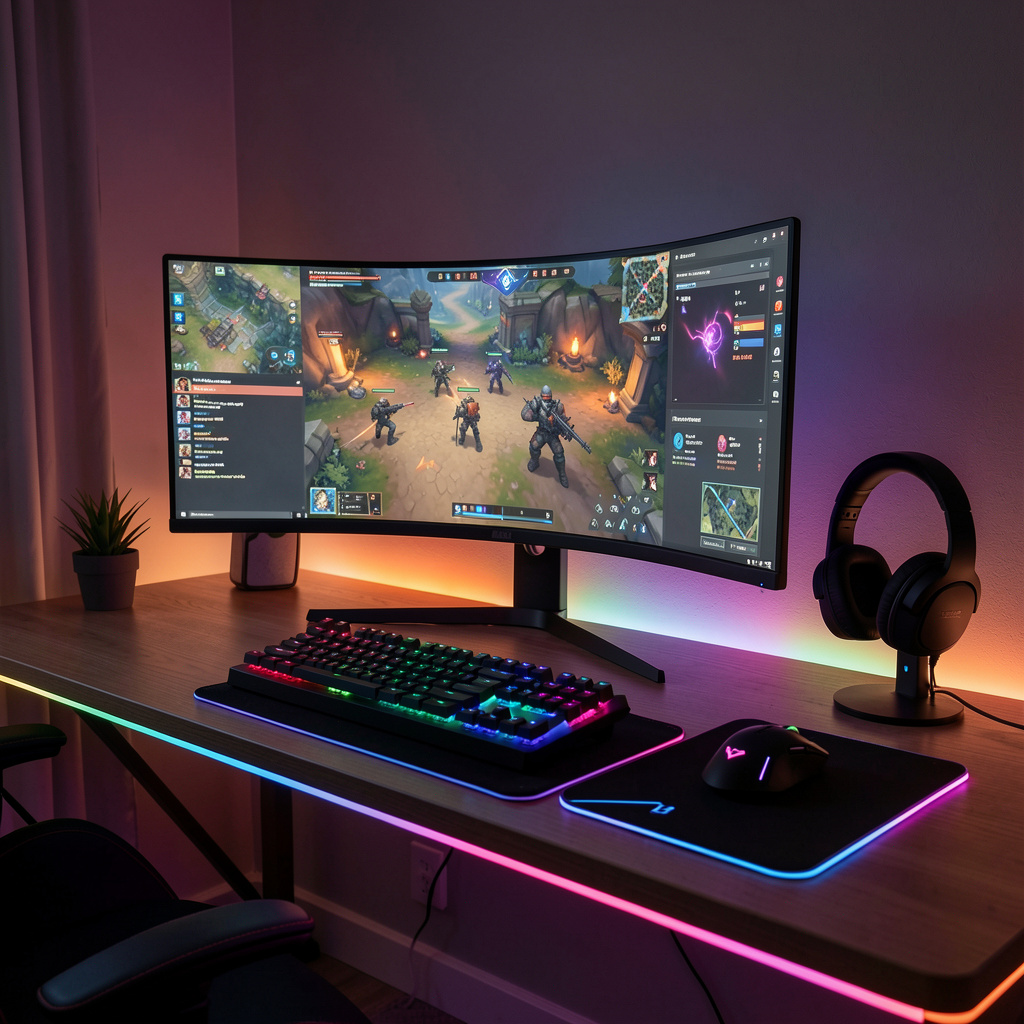
Online games are often seen as a source of fun and entertainment, especially for children and teenagers. However, many people overlook their educational value. In recent years, online gaming has proven to be more than just a pastime. It can also support learning, improve thinking skills, and encourage creativity. With the right choice of games and proper time management, online games can become powerful tools for education. They combine enjoyment with knowledge, making learning more interesting and effective.
Learning Through Play
One of the greatest advantages of online games is that they promote learning through play. When players are having fun, they are more likely to stay engaged and focused. Unlike traditional learning methods that sometimes feel boring or stressful, games create an interactive environment that motivates players to participate actively.
By solving challenges and completing tasks, players learn new concepts naturally. This process makes learning feel less like work and more like an enjoyable activity. As a result, students often understand and remember information better.
Improving Problem-Solving Skills
Many online games require players to think critically and solve problems. Strategy games, puzzles, and adventure games present obstacles that must be overcome using logic and planning. Players must analyze situations, consider different options, and choose the best solution.
This constant practice strengthens problem-solving abilities and critical thinking skills. These skills are useful not only in games but also in academic subjects like mathematics, science, and everyday decision-making.
Enhancing Memory and Concentration
Online games also help improve memory and concentration. Players often need to remember rules, instructions, maps, or strategies to succeed. Paying attention to details is important, as even small mistakes can affect the outcome of the game.
Regular practice of these mental activities strengthens the brain’s ability to focus and retain information. Improved memory and concentration can help students perform better in school and complete tasks more efficiently.
Developing Creativity and Imagination
Some online games encourage creativity by allowing players to design characters, build structures, or create entire worlds. Sandbox and simulation games, for example, give players the freedom to experiment and express their ideas.
This creative freedom helps develop imagination and innovative thinking. Players learn how to design, plan, and build projects from scratch. Such experiences can inspire interest in art, architecture, and technology-related fields.
Building Communication and Teamwork Skills
Multiplayer online games often require teamwork and communication. Players must work together to complete missions or achieve goals. They discuss strategies, share responsibilities, and support one another.
This cooperation teaches valuable social skills such as communication, leadership, and collaboration. Students who play team-based games may find it easier to work in groups at school or in other activities. Learning how to cooperate with others is an important life skill that online gaming can help develop.
Educational Games and Digital Learning
Today, many online games are specifically designed for educational purposes. These games teach subjects like mathematics, language, history, and science in an interactive way. For example, language games help improve vocabulary, while math games make calculations more fun.
Teachers and parents are increasingly using such games as learning tools. These educational games make difficult topics easier to understand and more enjoyable to study. They show that technology can play a positive role in modern education.Visit situs toto online for more details.
Boosting Digital Literacy
Playing online games also improves digital literacy. Players learn how to use computers, navigate online platforms, and understand digital tools. These skills are essential in today’s technology-driven world.
By interacting with digital environments, students become more comfortable with technology. This familiarity prepares them for future studies and careers that require computer knowledge and online communication.
Challenges and Responsible Use
Although online games have many educational benefits, they must be used responsibly. Spending too much time gaming can distract students from their studies or reduce physical activity. Not all games provide educational value, and some may contain inappropriate content.
Therefore, it is important for parents and teachers to guide students in choosing suitable games and setting time limits. Balancing gaming with other activities ensures that the positive effects are maximized while avoiding negative consequences.
Conclusion
In conclusion, online games offer significant educational value when used wisely. They improve problem-solving skills, memory, creativity, communication, and digital literacy. Educational games make learning fun and engaging, helping students develop important abilities in an enjoyable way. Although moderation is necessary, online gaming can be a powerful tool that supports both entertainment and education. With proper guidance, online games can play a meaningful role in modern learning.